Letter | The thoughtful publisher's paradox
Writing human-centered, complex ideas in a world where going viral and SEO matters more than the ideas themselves
Welcome to the first official Lighthouse Library post! I am still working on understanding my own thoughts and questioning the place of content marketing in the digital world, so I thought I’d share some behind the scenes first. This letter is a cozier version of my writing, full of blooming ideas.
A few weeks ago, after I decided to start a new creative project (part of which you are reading), I set out to learn more about my “ideal client.” Advised by a friend, I embarked on a market research journey. But before we get there, let’s rewind.
Over the summer, I joined a Stack-Along experiment in my favorite online community, the Lab, with other writers and aspiring Substackers. We would cheer each other on as we attempted to start or publish more on our Substack publications.
Our group was full of colors and wonderful ideas. There was the aspiring travel writer with the witty, thoughtful, and personal retelling of traveling by bus in South America. There was the coach who wrote about finding her literal voice as a singer. There was the urban journalist with the poetic, nature-inspired titles. There was the community facilitator herself with the hopeful, climate-activism-infused letter to the future retelling her Oasis concert experience.
During our community check-in call at the end of that experiment, many of them had written extensively. They had also found the process fun and joyful. But still, they had not been hitting the publish button nearly as often. A million questions popped up in my mind about why.
After the call, I wondered: if the writing was of such high quality, both in the writing itself and the richness of the ideas… Then what had happened to the pieces sitting in hidden folders and Notes apps?
The lightbulb moment
That community check-in call was a major lightbulb moment. I realized that despite all being excellent writers, each with a world of experiences, stories, and ideas worth sharing, the ratio of drafting and ideation to follow through was low. I just checked, and many of them have not written since July.
Now, let’s move forward to August. I embarked, this time, on a new stage of the journey. I asked myself the very basic question: if I were to put services together as an editor, what would they be? I knew I wouldn’t be doing just editing. I wanted to be a cheerleader and draw from my experience as a writer and editorial director for a digital publication. My passion for capturing and sharing ideas would also be at the center of my services. But what challenges, specifically, could I help navigate?
I put together a survey, focused on the publishing experience rather than the blank page. Here, the question was: What stops you from hitting the publish button?
My initial goal was to send it out to 5 people, hoping I’d gather 2-3 responses. That would give me some clues to get going.
My intuition, again based on my work in digital publishing, was that:
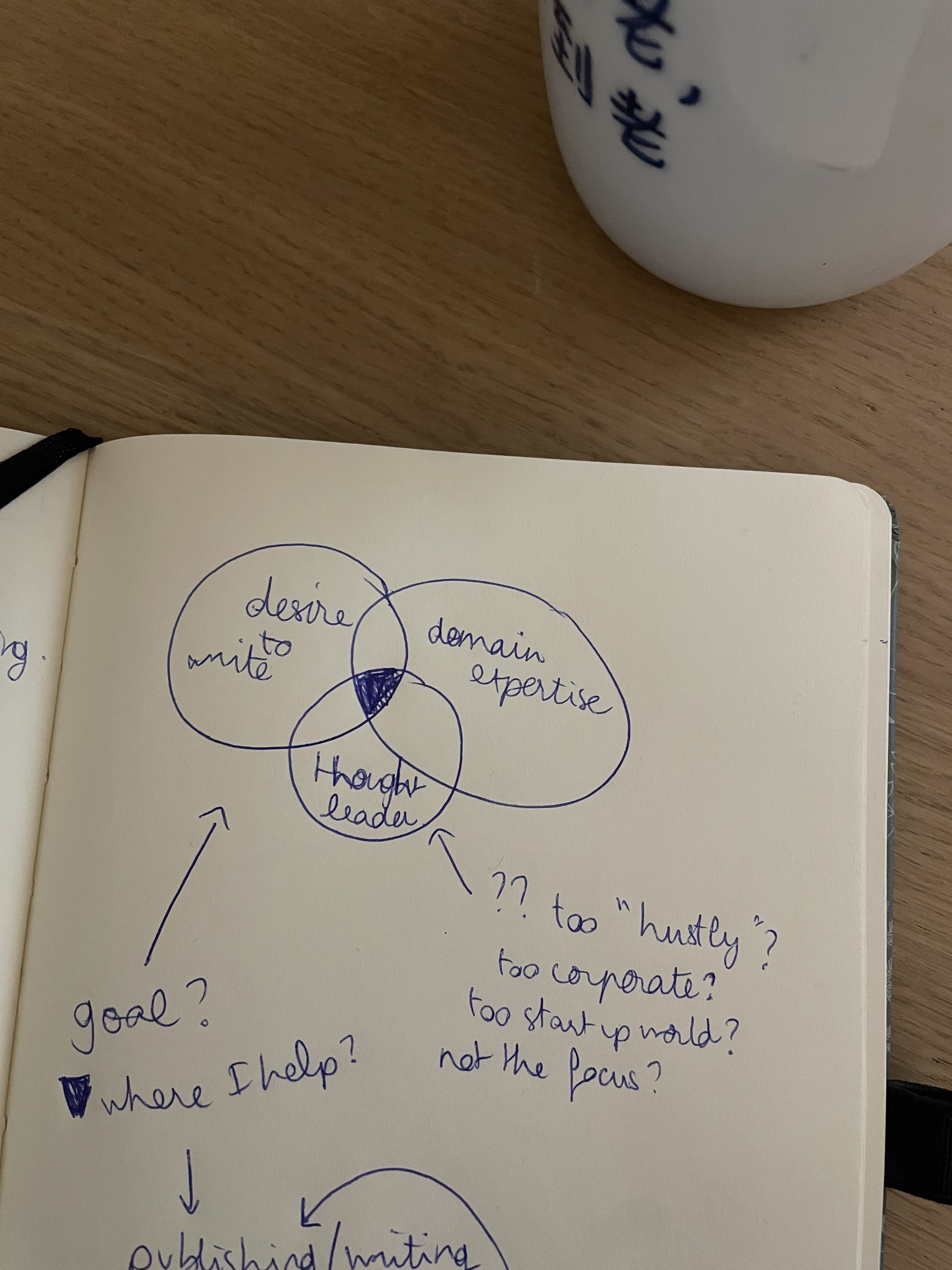
- My “ideal client” would be a thought leader in their field, not because of their extensive audience, but because of the quality of their services and thinking.
- They’d come to see me because they’d want to take their knowledge, expertise, and experience – acquired through working with clients – out into the world to increase their reach.
- I imagined that their publishing aspirations would be linked to their other professional goals.
I sent my survey to 3, 4, 5 people to begin with. As I talked about my project, more people agreed to participate. I also suddenly remembered newsletters I loved but had stopped receiving, and got in touch with the writer, asking if they’d want to tell me about it.
Early findings from the research: it’s not perfectionism
It is wild to think that there is a parallel universe where I am on this same journey, but not conducting this research. I am already observing patterns across very different profiles, where the challenges are the same, but experienced from different angles. The unique context and overall business & professional challenges of the respondents have a complex impact on whether or not, and how, they publish their writing.
Well-meaning friends who sit on the outside think: you are too much of a perfectionist! Just go ahead and publish already! But it is not as simple – and it is definitely not about producing “perfect” content.
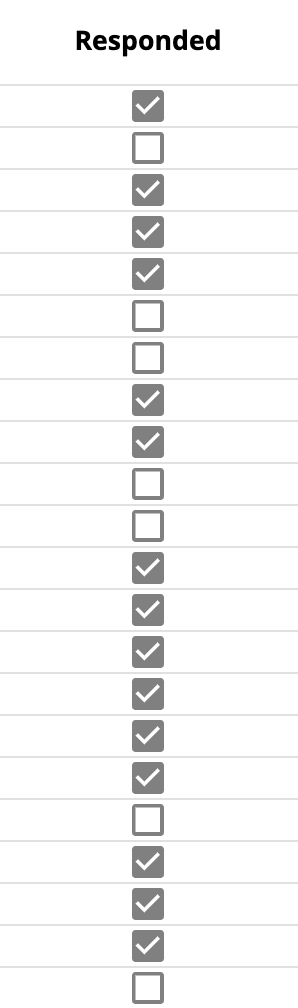
Here are a few of the patterns I’ve noticed:
- For the respondents, being true to themselves is important; in fact, they see writing as fun, enjoyable, and an outlet for self-expression. Yet it is difficult to organize personal experiences in a way that makes sense for both the outside world and a professional context. Writing publicly from your perspective can feel like walking around naked on the internet. It is even more difficult to do when you are told to “niche down” and speak to a faceless “audience,” boxing both the writer and the reader into squares that sadly matter more than their contents.
- Along the same line, “merging all parts of [themselves]”; showing “all [their] messy glory;” “honoring [their] voice” is important. I personally think that writing from your own perspective is what makes writing unique and gives ideas more depth…
- … Not that anybody asked me, which, funnily enough, for some of the respondents, is a thought that pops up. It can sometimes feel like nobody asked them for their opinion. New, original, and deep thinking doesn’t necessarily fall under a trend, within a clear industry. Sometimes this means having to start with “hey, here’s a thought I had the other day…”
- Consistency concerns and misalignment with existing business goals or shifting projects is a big blocker to publishing. Some explain that they’re afraid to commit to a pace they cannot keep up with (doing great client work is always a priority); others share that they don’t know where or how to fit the content into their existing public ecosystems (blog, social media, pre-existing newsletters…).
- High quality standards, both in writing and ideas, are also important for the respondents. That is often listed as a direct barrier to publishing content online. What if my topic isn’t well-researched? What if I publish half-baked content? What if I get something wrong, or give wrong information to the right people? It leaves the writer with the sensation that the piece is never “finished enough” – and sometimes it sits in a “to edit” folder until the idea comes back in another shape.
What I see, mostly, is the human element in everything: within the process of writing, and in the impact it aims to have. Hitting the publish button is not just about putting things out there and selling services or products. It creates consistent and intentional opportunities, both for the writer and the reader, to exchange ideas and influence each other, collaborate, think, take action, and so much more.
Reading all the responses got me excited, because they are problems I have encountered before, both as a writer & editor and content ecosystem builder. They all have solutions. The trickier part is that the solutions are not one-size-fits-all. They require a little digging, brainstorming, clarifying, and also letting go of tired marketing blueprints to make space for a human-centered perspective. That’s where I am hoping to come in.
It is difficult to write complex ideas in a world where going viral and writing SEO-focused articles matters more than the ideas themselves. I hope I can be a cheerleader that encourages unique perspectives to take space online, creating our own movement — publishing high quality bodies of work that matter. Not for revenue only; not for numbers-focused reach goals; but for real humans with real thoughts, aspirations, and needs for connection. I hope to be a lighthouse keeper who turns on the light so you can navigate your way to building your own beautiful, insightful digital library.
Wishing you gentle sailing — and I hope you’ll stick around.
⛵️
I would love to hear your thoughts. Did something resonate?
The Lighthouse Library is being built as I write and as you read. If my ideas resonate, you can let me know by subscribing, liking, commenting your thoughts, sharing, and pledging to become a paid subscriber for as little as 5€ per month. Thank you for supporting my work!