Letter | When consistency becomes a cage
Why "post every Tuesday" might be the wrong goal

Welcome to the Lighthouse Library! In this publication, I explore how small business owners can let go of sound (yet questionable) content creation advice to focus on publishing long-form content that feels true to who they are. In this letter format, I share budding ideas and invite you to think along with me.
Finding and maintaining a comfortable publishing consistency is a big challenge. It takes time, dedication, practice, and structure to keep up with our ideal pace – or so we think.
Before we dive into consistency (what do we even mean by it?), I want to share the story about writing and hitting the publish button in the most challenging, time-consuming, energy-draining period of my life: the first three months after giving birth to my daughter.
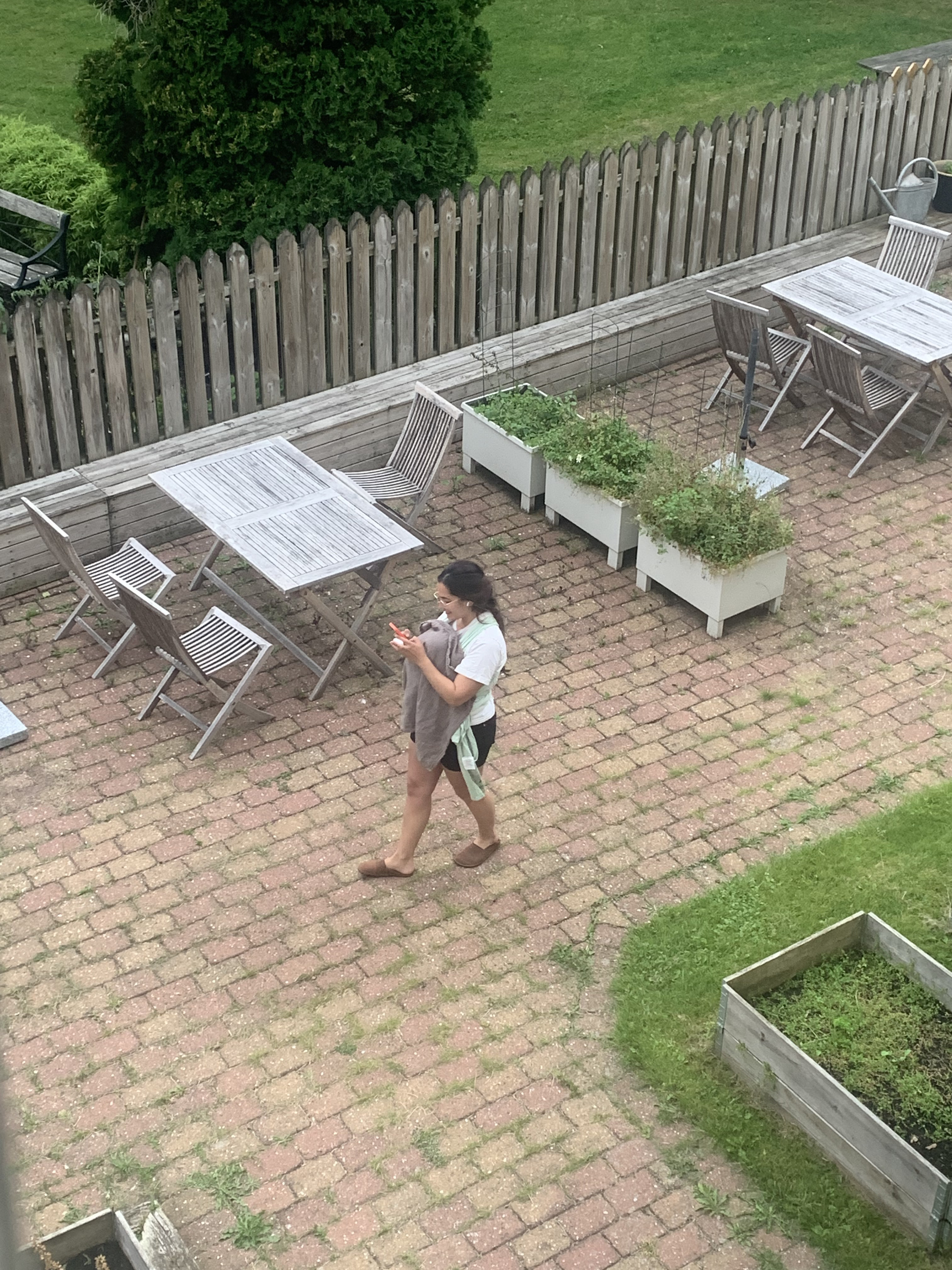
At that time, I was entirely consumed by this new experience. I breathed, ate, talked, and slept baby life. I was overwhelmed by all my new emotions and the reality of life with a newborn. And yet, my fingers burned with an urge to write and share my thoughts. I needed to process in words, the way I have always done, and I needed to feel less alone. To connect with my fellow new mothers, to have a space to let everything go. And so, I turned to Substack.
On August 1, 2024, pacing the patio of our building with a five-week-old baby sleeping against my chest in a turquoise wrap, I created my account. Into motherhood: a diary was born.
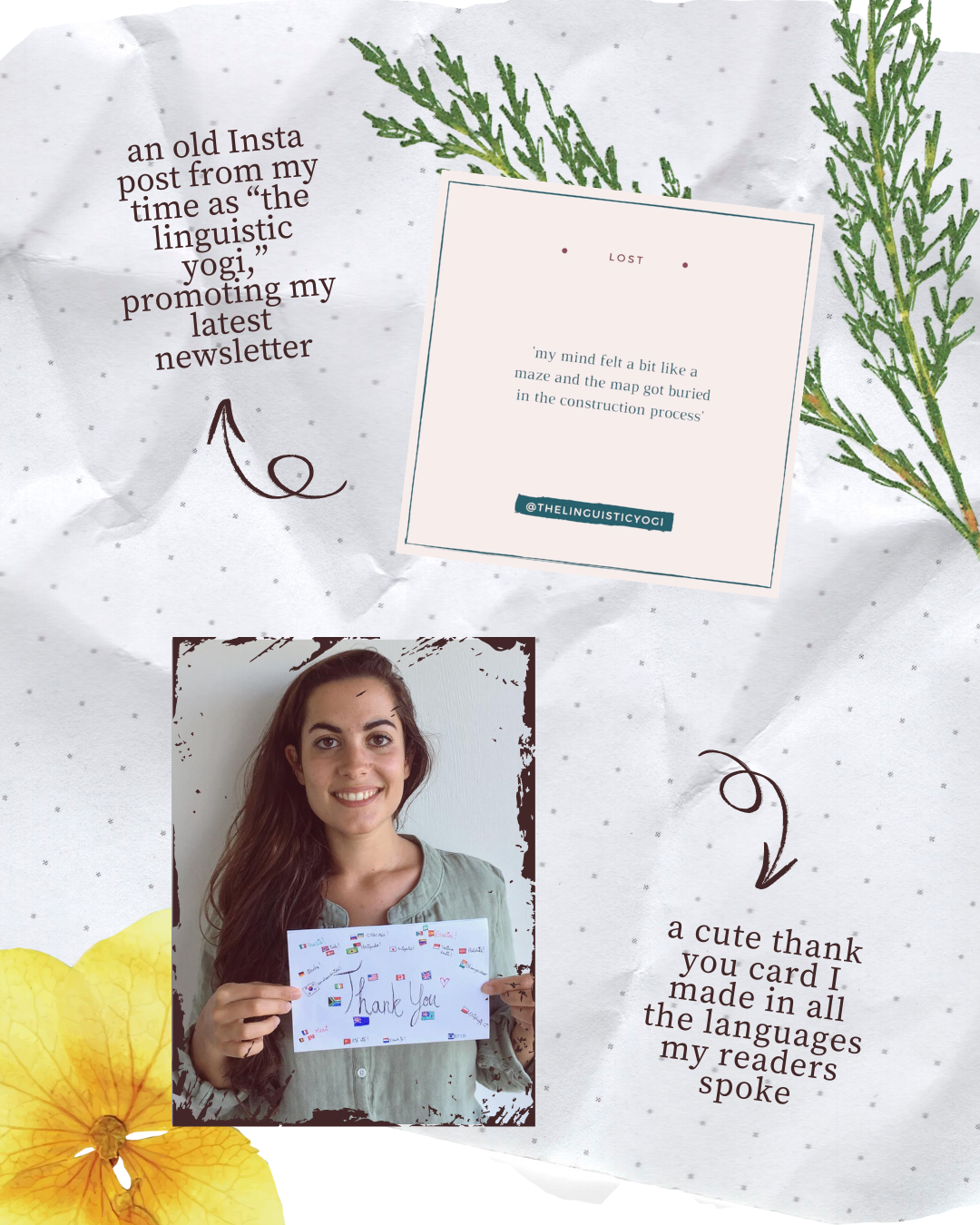
From August to November 2024, I published five to seven posts a month. That is my best publishing record in my entire career as a writer.
I wrote during and after 3 a.m. feeds when I couldn’t go back to sleep, intense thoughts spiraling in my head. When I think back to that time now, it seems like a miracle that I was able to manage it. But my publishing pace was consistent with my needs and aspirations, and I was satisfied with my consistency. Impressed, really.
So how come it worked so well, despite the fact that I was sleep deprived, and living one of the most difficult experiences of my life, let alone having to keep a vulnerable human alive and comforted?
Why it worked: the emotional side
I was, in hindsight, going back to my roots as a public writer. I’ve had multiple blogs since 2006, and I’ve always loved experimenting with genres, formats, and ideas. My first professional newsletter project in 2018 was called “the Word of the Week” where every Monday, I’d pick a word and redefine it, using my own experience to shape an idea. I’d also share reflection prompts for the reader to work out how they experienced the word in their own life. I genuinely enjoyed it: the weekly pace, the container, the creative exercise. It gathered all my favorite things: looking up words, thinking about meaning, self-reflection, connecting with other humans at a slow pace, without the urgency and noise of social media.
I had a strong purpose to keep me going. It was twofold:
My experience was so tough; I had the worst anxiety of my life and didn’t receive the support I needed. It was difficult to grasp that a) nobody would have told me about this, or b) that anyone would have a positive experience of that early motherhood phase. I wanted to shout to the world how I was journeying through motherhood beyond the baby bubble and cute photos and connect with other mothers.
I needed human connection and craved a space for self-expression. Both are often motivators for me, and it was true that August afternoon when I created my account.
Why it worked: the practical side
- I had done this before. While the platform (Substack) and the contents (diary notes) were different from what I’d published before, I was on familiar ground. That made the project accessible to me.
- The stakes were extremely low. My income, professional identity, or future career opportunities were not tied to this. Sure, my publication was – and still is – public, so the best and worst thing was that nobody would read it – or that everybody would read it. Either way, the consequences would have a low impact on my life as it was.
- I simplified the process of writing + publishing. I wrote from my phone, used a Notes folder where I’d already logged thoughts during my pregnancy, and continued to log them in there. The Substack app made it easy: I would copy-paste, add a few photos and captions, and hit publish. For the experiences I didn’t have the time or space to put into words (like my birth story), I recorded voice notes.
- My goals and “reader profile” were clear, simple, and they strengthened organically as I wrote. I wanted to process, let go, turn my posts into keepsakes, like mental photos of a time I would probably forget. I wanted to connect with other mothers beyond texting. I wanted to have honest conversations about motherhood.
- I was extremely flexible with how I wrote, letting go of structure, format, and repeatability. My only rule was this: I was writing a diary, so I’d put in the date in the title and use a few words to describe what the note was about. I was in an experimental phase, and the experiment mattered more than the fact that it was a phase. This meant that I felt free to write about whatever I wanted, however I wanted, whenever I wanted. So what if I stopped writing in a month? Changed my pace entirely? Changed my style and format? It was my space, my call.
- I experimented with many different formats. Short formats, list formats…I even once published a post without editing it at all (gasp! I never do that).
Because of that flexibility and the permission to let this project evolve organically, I didn’t stress out when my pace slowed down. I only published 5 times (and wrote little more) between December and March this year. I didn’t write at all in April.
Now, where does consistency fit into all this?
Consistency: a new, human-centered definition
If you ask me whether I’ve been consistent in my writing, at first glance, I would say no. A friend recently told me they see me as a prolific writer, and I would agree with that. I’d even go as far as saying that I’ve been a prolific published writer (articles, Substack, newsletters, blogs, even a book – I’ve published a lot of words over the years). But I’ve not published every single week, on the same day, at the same time, all these years.
But – and this is an important detail – I have rarely felt friction between what I’ve wanted to do with my writing and the reality. By that, I mean that I have often published what I’ve written. And in that way, I feel that I’ve been very consistent.
I looked up definitions for us – I’m a linguist by trade, after all. I love a good ol’ definition and etymology to understand what we mean when we use words (basic, I know, but key).
I won’t bore you with the details (although if you like etymology as I do, let’s nerd out in the comment section), so here is a simplified version:
Consistent was initially made of two parts (in the 16th century):
- con - Latin for “with”, and
- sistere, from the root sta- - Latin for “to stand, to place, to be standing”
So the first meaning of consistent was to stand with, and a century later, another recorded meaning was “to stand in agreement with.”
Today, the general understanding is that someone or something is consistent when they always behave in the same way (e.g., we need to offer a consistent customer experience), or when it makes logical sense (e.g., an argument is consistent when all its parts make sense).
And this explains why I don’t feel that I’ve been inconsistent in my writing and publishing: My goals have often aligned with my reality. In fact, I could say that I’ve been most consistent in my ability to write and publish only when it resonates with my season of life.
Did I want to write and publish four times a month? Could I? Yes, and so I did.
Did I not have the bandwidth to publish at all? Nope, and so I did not.
My life has evolved, and so, my publishing goals and pace have, too. It doesn’t mean that I haven’t felt frustrated with it: I would love to have hundreds of blog posts to share all the ideas I’ve had over the years. It’s just not realistic to think we can always be consistent with our ideal publishing pace, or that our ideal publishing pace is always aligned with our lives, both personal and professional.
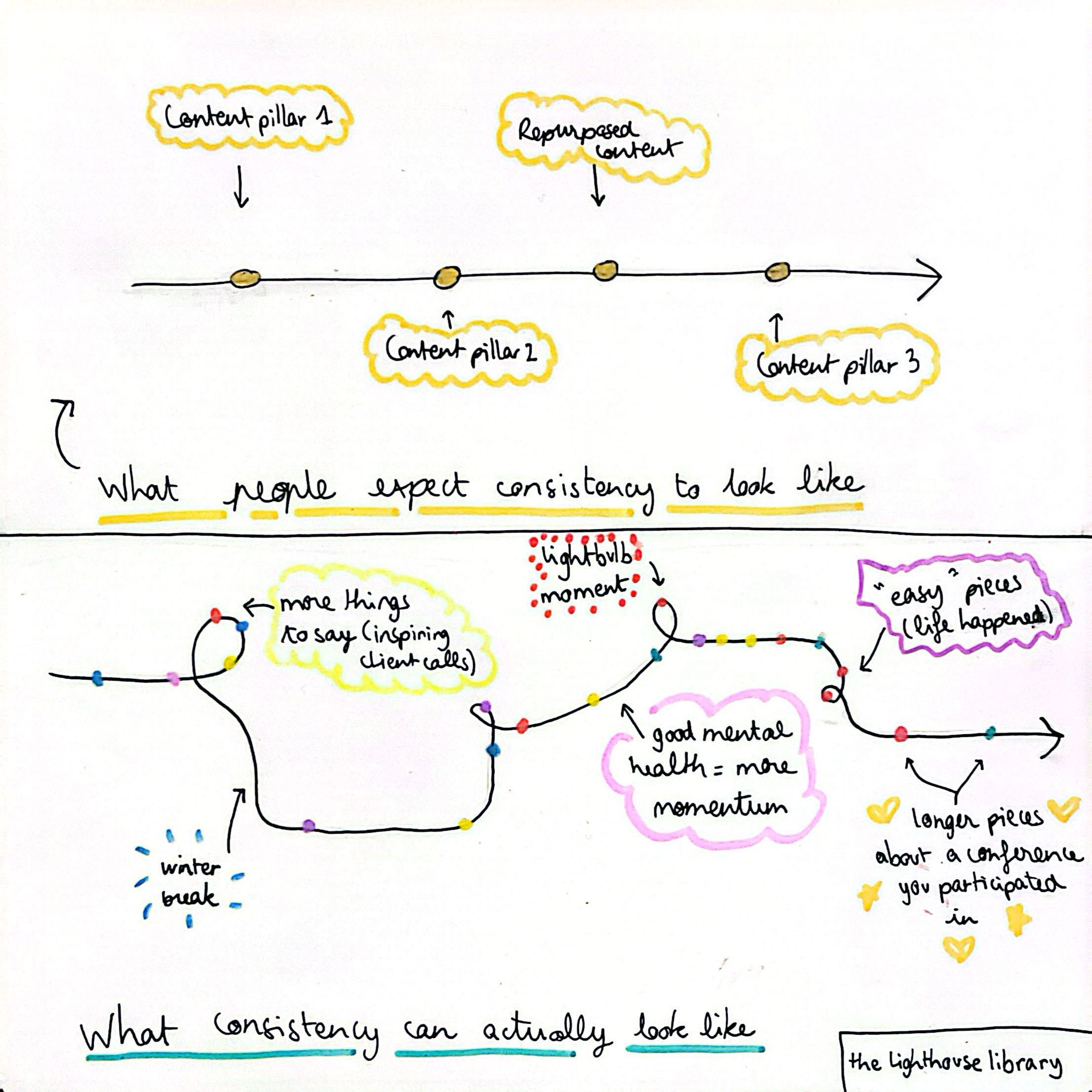
I think we tend to understand consistency, in today’s day and age, as working like clockwork. It is heavily influenced by social media and scheduling tools, overbearing big brothers in the digital content creation space. They turn creatives/small business owners/anyone who wants to have a meaningful presence online into content-making machines. They essentially say that if you are not sending out your email to your list every Friday at 10 am, you’re doomed; if you don’t post every second day on Insta, nobody will pay attention to you. Who can honestly keep up with that?
The reality is that we are humans, not robots. Sometimes, life comes up, and that’s okay. We still get to call ourselves consistent – and be proud of it – if we published a post 10-12 times over a year; that is still almost once a month, apart from that month you got sick, and that month you were recharging your creative batteries on a well-deserved holiday. The best thing we can do is be honest about our reality and create a vision that aligns with that – just like I did with my diary-style publication. Achieving 10-12 published pieces is still worth celebrating.
An invitation: a kinder look at your publishing history
If you feel that you’ve not been consistent with your goals, here’s an invitation to think again.
Take the definition of consistency I described above and use it to scan through your published work and publishing pace in the past months or years.
- What do you notice? Are there patterns in how you published – or not?
- What happened in your life that made it possible for you to publish?
- What came in the way of your intentions and plans?
- Do you feel that your goals were in agreement with your professional, mental, and creative capacity?
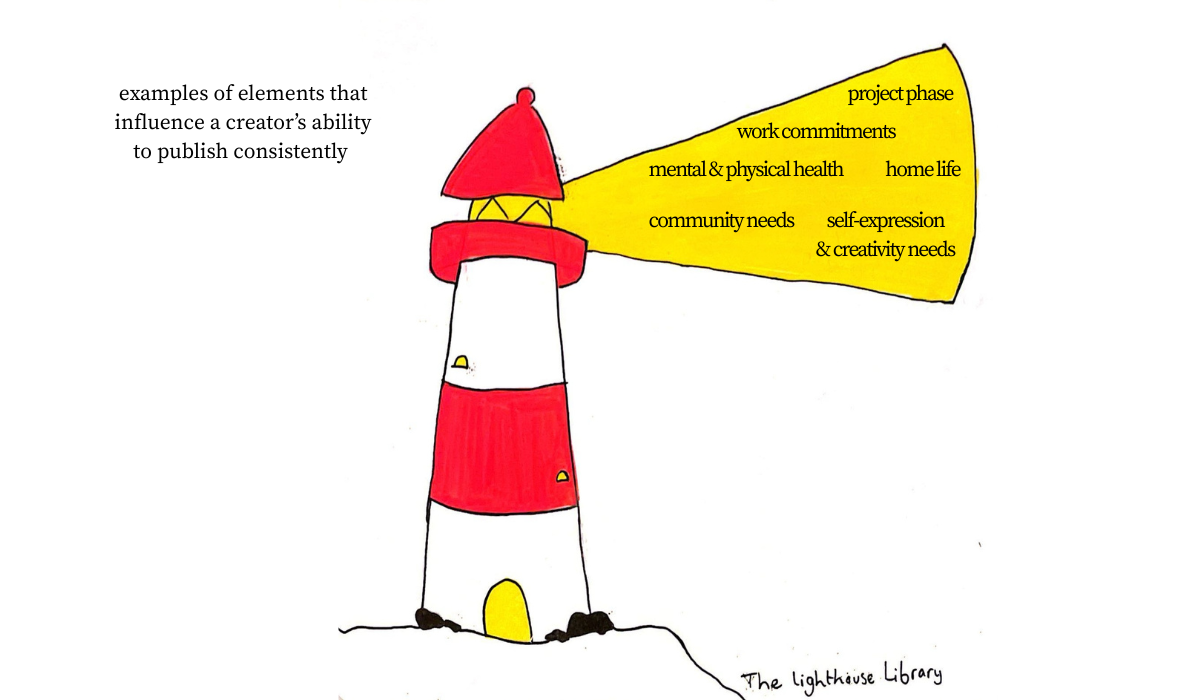
I’d love to hear your thoughts on this, so feel free to leave a comment below! Reflecting won’t solve everything there is to say about consistency, or how to publish more consistently. I am barely scratching the surface here, and I will be coming back to this topic many times in the future.
So, if you’re not already, subscribe below – welcome to the Lighthouse Library 💡📚 My goal for this space is to turn on the light to help us navigate the waters of hitting the publish button: to craft meaningful digital libraries in a productivity- and optimization-obsessed world.
Next time you’ll hear from me, we’ll be looking at how we can create focused and unique long-form content without relying on content marketing principles like the niche. You can get cozy and read my last essay in the meantime, Breaking up with content marketing.
Happy sailing! ⛵
Ely
The Lighthouse Library is being built as I write and experiment. If my ideas resonate, you can let me know by liking, commenting your thoughts, sharing, subscribing, and pledging to become a paid subscriber for as little as 5€ per month. Thank you for supporting my work!
This post was edited by Jordan Parker Reed.